P0420 Code on Fleet Vehicles: Diagnosis, Costs & Impact
TL;DR 4 key takeaways Definition: The P0420 code indicates that the catalyst on bank 1 of a vehicle is operating below the efficiency threshold,...

Keep an eye on the road
Simplify your driver's routine
For efficient decision making
Ensure the compliance of your fleet
Simplify the daily life of your drivers
Maximize the value of your data
Unparalleled monitoring of your assets
The friendly competition that pays off
Planning powered by data
Exceed your customers' expectations
Provide better service to your users
Maximize the satisfaction of your citizens
Simplify your daily life on the construction site
Facilitate the electrification of your fleet
Our experts meet your needs
Easily meet the standards
Improve the safety of your drivers
Protect your data and your fleet
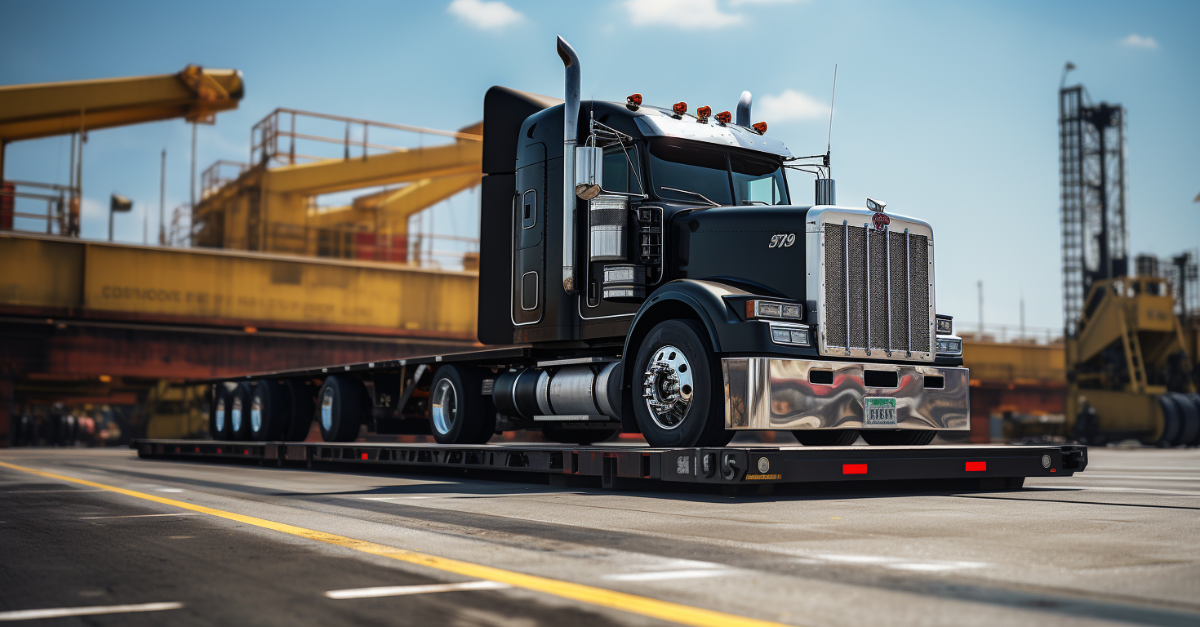
The Gross Vehicle Weight Rating (GVWR) is the maximum safe operating weight of a loaded truck or commercial unit, set by the manufacturer and printed on the compliance label inside the driver's door jamb.
For commercial fleet managers, GVWR is more than a specification: it determines legal vehicle classifications, triggers ELD compliance obligations at specific thresholds, and directly influences towing capacity, payload limits, and insurance coverage.
AttriX helps Canadian fleet operators track and manage these parameters across their entire portfolio.
GVWR is established by the manufacturer after structural, braking, suspension, and tire load testing. It is not a field measurement; it is a certified rating that reflects the maximum the vehicle was engineered to handle. GVWR combines four weight components:
The GVWR is stamped on the manufacturer's certification label, usually located on the driver's door jamb or B-pillar. It also appears on the vehicle registration in most Canadian provinces.
Two ratings that fleet managers regularly confuse are GVWR and GCWR (Gross Combined Weight Rating). GVWR applies to a single vehicle. GCWR is the maximum total weight of the tow vehicle and everything it is pulling: trailer, cargo, and any additional load. When a truck is used to tow a trailer, both ratings apply simultaneously. The tow vehicle must stay within its own rated limit, and the combined unit must not exceed the GCWR specified by the manufacturer.
For fleet operators, this distinction has practical consequences: adding a heavy trailer can push an otherwise compliant truck into a higher vehicle class or beyond its certified towing limits, triggering additional regulatory obligations.
In Canada, vehicles with a GVWR of 4,500 kg (approximately 10,000 lbs) or more are classified as commercial motor vehicles under federal transport regulations.
Crossing that threshold activates a series of obligations: registration under provincial commercial vehicle programs, mandatory inspection cycles, driver hours of service rules, and in most cases, the requirement to operate an electronic logging device to record driving and rest time. Certain units below that threshold can also be subject to these rules when carrying dangerous goods requiring placards.
Managing these classifications across a mixed fleet is where errors tend to accumulate. Our team supports fleet managers through full transportation compliance, from vehicle classification audits to hours-of-service monitoring. For a detailed overview of what Canadian operators are required to do, see our commercial transport compliance guide.
Payload capacity is the difference between GVWR and curb weight. The larger that gap, the more the vehicle can carry before reaching its rated limit.
Operating above GVWR increases braking distance, accelerates suspension and tire wear, and weakens the vehicle's structural integrity over time. For a commercial fleet, those effects translate directly into unplanned downtime, higher maintenance costs, and elevated accident risk.
From an insurance and liability standpoint, an overloaded vehicle involved in an accident can give the insurer grounds to contest the claim. From a regulatory standpoint, roadside enforcement can issue fines on the spot when a vehicle is found operating above its rated weight.
AttriX, Canada's leading Geotab integrator, provides the telematics infrastructure to monitor fleet operations in real time, flag vehicles approaching their weight limits, and generate the compliance documentation your fleet needs.
Our solutions integrate directly with the GoSight onboard camera for added visibility on load handling and driver behavior. Our compliance specialists work directly with fleet managers to map GVWR classifications, identify which vehicles trigger ELD mandates, and structure a compliance program that scales with your operation.
Talk with a specialist to review the GVWR classifications and compliance obligations specific to your fleet.
GVWR stands for Gross Vehicle Weight Rating. It is the maximum safe weight of a loaded vehicle, certified by the manufacturer. Exceeding it compromises braking performance, accelerates mechanical wear, creates legal liability, and in Canada, can affect the vehicle's regulatory classification.
GVWR is printed on the manufacturer's certification label, typically mounted on the driver's door jamb or B-pillar. It also appears on the vehicle registration document issued by your provincial motor vehicle authority.
GVWR applies to a single vehicle. GCWR (Gross Combined Weight Rating) is the maximum total weight of the tow vehicle and the trailer it is pulling together. When towing, both ratings must be respected simultaneously.
Payload capacity equals GVWR minus curb weight. Towing capacity is bounded by GCWR minus GVWR. Adding a trailer reduces the available payload of the tow vehicle, so fleet managers need to account for both ratings when assigning towing tasks.
Exceeding GVWR exposes your fleet to roadside fines, contested insurance claims in the event of an accident, and potential voiding of the manufacturer's warranty. Structurally, repeated overloading accelerates frame fatigue and suspension failure, leading to premature vehicle replacement.

TL;DR 4 key takeaways Definition: The P0420 code indicates that the catalyst on bank 1 of a vehicle is operating below the efficiency threshold,...

TL;DR 4 key takeaways Definition: The P0455 indicates a large leak in the EVAP system, detected by the onboard OBD2. Fleet impact: Moderate in the...
.jpg)
 Anthony Mainville: Apr 29, 2026, 1:08:24 PM
AI agent platforms, the co-pilot model, and why technology should serve your people GOOGLE CLOUD NEXT 2026 RECAP , FLEET INTELLIGENCE SERIES PART 3...