P0420 Code on Fleet Vehicles: Diagnosis, Costs & Impact
TL;DR 4 key takeaways Definition: The P0420 code indicates that the catalyst on bank 1 of a vehicle is operating below the efficiency threshold,...


A commercial fleet costs money in three places: the vehicles, the fuel, and the time. Most fleet managers can name the first two to the dollar. The third is where the margin quietly goes.
Commercial fleet management is the work of seeing all three at once. It covers tracking, maintenance, compliance, driver performance and the decisions that follow from them.
This guide sets out what to track, how to compare the software that does the tracking, and where Canadian operators find their costs. It is written for fleet managers who already run a fleet in Canada, not for someone deciding whether to.
Commercial vehicle fleet management is the coordinated oversight of the vehicles a business operates: acquisition, maintenance, fuel, compliance, driver supervision and asset tracking. It differs from managing personal vehicles in scale and in accountability. Every vehicle carries a regulatory obligation, an operating cost, and a person whose safety is the employer's responsibility.
The discipline has shifted over the last decade. Location data used to be the product. Now it is the raw material, and the product is the fleet management decision it supports: which vehicle to replace, which route to change, which driver to coach.

Four fleet management functions carry the workload. They are usually bought together and used separately, which is where most of the value leaks.
Location settles the question anyone asks first, and it is the easiest to install. Its real value is cumulative rather than immediate: a month of position history shows which vehicles serve which zones, and where two units cover the same ground.
Commercial fleet monitoring becomes useful when position is joined to engine hours. A vehicle parked with the engine running for forty minutes a day is not idle in the accounting sense, and only the combination reveals it.
Maintenance planned on the calendar treats a truck that ran 4 000 kilometres like one that ran 40 000. Scheduling on measured usage instead, engine hours or odometer reading, spreads the shop visits where the wear actually is.
Compliance obligations sit in the same place, because both are proved by records. Our guide to fleet compliance in Canada covers what applies to commercial carriers.
Fuel gets measured everywhere and acted on rarely. The reason is that consumption per vehicle says little on its own: it reflects the route as much as the driver.
What shifts driving habits is comparison between drivers on similar routes, with the four inputs that actually move consumption, idle time, harsh acceleration, speed over the limit and engine load.
Route optimisation software pays when the fleet has enough stops per day for sequencing to matter, which for most Canadian operations means service and delivery businesses rather than long-haul. Below that threshold, the gain comes from dispatch visibility instead: knowing which unit is closest and free, rather than calling three drivers to find out.
Most comparisons between fleet management platforms stall on feature lists, because every supplier publishes the same features. The differences that matter show up after deployment, not during the demonstration.
Utilization monitoring needs three data sources combined: engine hours, distance travelled, and idle time per asset. Tools that report only location will show you where equipment is, not whether it earns its keep.
The gap most fleets discover is on the assets that have no engine. Trailers, generators and site equipment seldom appear in a vehicle-only platform, and that is usually where unused capacity hides. An asset tracking system that keeps non-powered equipment on the same map closes it.
Asset utilization also settles rental decisions. A company that can read how many days a unit actually worked stops renewing equipment it keeps out of habit.
That last question matters more than it looks. In Quebec, advanced training can qualify for provincial workforce funding, which lowers the real cost of a deployment. Our training programs are delivered by certified trainers.
Talk with a fleet specialist about your current setup.
Telematics is the layer that turns vehicle activity into a record. A device reads the engine bus and the position, sends both to a platform, and the platform makes them queryable.
What separates fleet management software in practice is not what it captures but what it returns. Two platforms reading the same engine bus can produce a live map and a usable cost report, or a live map alone.
GPS tracking tells you where. Automated reporting tells you what to do about it, and it is the part that decides whether anyone still uses the platform after six months.
Alerts have the same rule as maintenance intervals: too many and they get ignored, too few and they arrive late. Start with three, engine fault, unauthorised use outside hours, and a maintenance threshold.
Commercial truck fleet management differs in three ways. Regulatory exposure is higher, downtime costs more per hour, and the vehicle itself generates far more diagnostic data than a light-duty van.
That third point is an advantage once it is used. Engine fault codes read as they occur turn an unplanned roadside failure into a scheduled shop visit. Predictive maintenance on heavy trucks is where telematics pays for itself fastest, because the alternative is a loaded trailer stopped on a highway.
Compliance obligations also scale with weight class, and commercial truck fleet management gets harder the moment a unit crosses into the United States, where a second regulator applies its own device certification rules.
Electric fleet management shifts what needs watching. Fuel consumption gives way to energy consumption, and range replaces tank capacity as the planning constraint.
The constraint is rarely the vehicle. It is the depot: how many units can charge overnight on the available supply, and what that does to the morning departure sequence.
Range planning needs real consumption data by season, because cold weather changes usable range enough to break a route that worked in September.
State of health degrades slowly and unevenly across a fleet. Tracking it per vehicle turns a replacement decision that would otherwise be a guess into a scheduled one, and it protects resale value.

Fuel is the cost everyone watches. It is rarely the cost that moves most.
Underused vehicles are the common finding when utilization data first arrives: a fleet discovers it is paying for capacity it does not use, often in one depot rather than across the whole operation.
Replacement timing is the second. A vehicle kept two years past its economic life costs more in maintenance than the payments on its replacement. Both findings need the same thing, usage history long enough to be believed. Our guide to fleet preventive maintenance sets out how to build that record.
Safety analytics and productivity read the same data from two angles. Time between stops measures one; harsh braking and speed measure the other, and a fleet that improves the second usually improves its insurance position too.
Insurance is the other reason fleet managers track this. Some Canadian insurers reduce premiums for fleets that can document driver behaviour and collision context, which turns a safety programme into a line the business can measure.
AttriX is the number one Geotab integrator in Canada, and our fleet management services cover the whole chain. Our team deploys the hardware, connects it to the platform, and trains the people who use it, across merchandise transport, passenger transport, construction fleet management and municipal fleets.
What that means for a commercial fleet:
Fleet management solutions are seldom bought whole: modules such as Lighthouse, GoSight cameras and Driver Challenge are configured to the fleet rather than included by default. Your specialist confirms what fits your operation and your budget.
The vehicles differ more than the discipline. Commercial fleets move goods or people on public roads and carry the corresponding regulatory load. Industrial fleet management often covers equipment operating on private sites, which may never travel on a highway. That changes inspection obligations, not the case for tracking utilization.
Compare five things: data ownership and export, integration with your existing systems, who installs and supports locally, compliance coverage for your jurisdiction, and how cost scales with fleet size. Feature lists converge between platforms. These five do not.
Energy consumption per kilometre by season, state of health per battery, and charging duration against depot capacity. Range anxiety in a fleet is almost always a planning problem rather than a vehicle problem, and these three inputs are what turn it into a schedule.
Telematics converts vehicle activity into a record you can act on: engine faults before they become breakdowns, idle time by driver, route deviation, harsh braking. The performance gain comes from the decisions taken on that record, which is why reporting quality matters as much as data capture.
Begin with location and engine hours. They are the two inputs that feed everything else, including utilization, maintenance scheduling and cost per kilometre. Every business that tracks these two well can add the rest later without changing software. Fleets that begin with driver scoring before establishing baseline usage tend to measure behaviour without context.
Commercial fleet management gets better in the order the data arrives. Location first, then utilization, then cost per kilometre by vehicle. Each layer answers a question the previous one raised.
If you are choosing a platform now, work through the five criteria above before comparing feature lists. They are the differences you will still care about in three years.
Talk with an AttriX specialist to review your fleet setup.
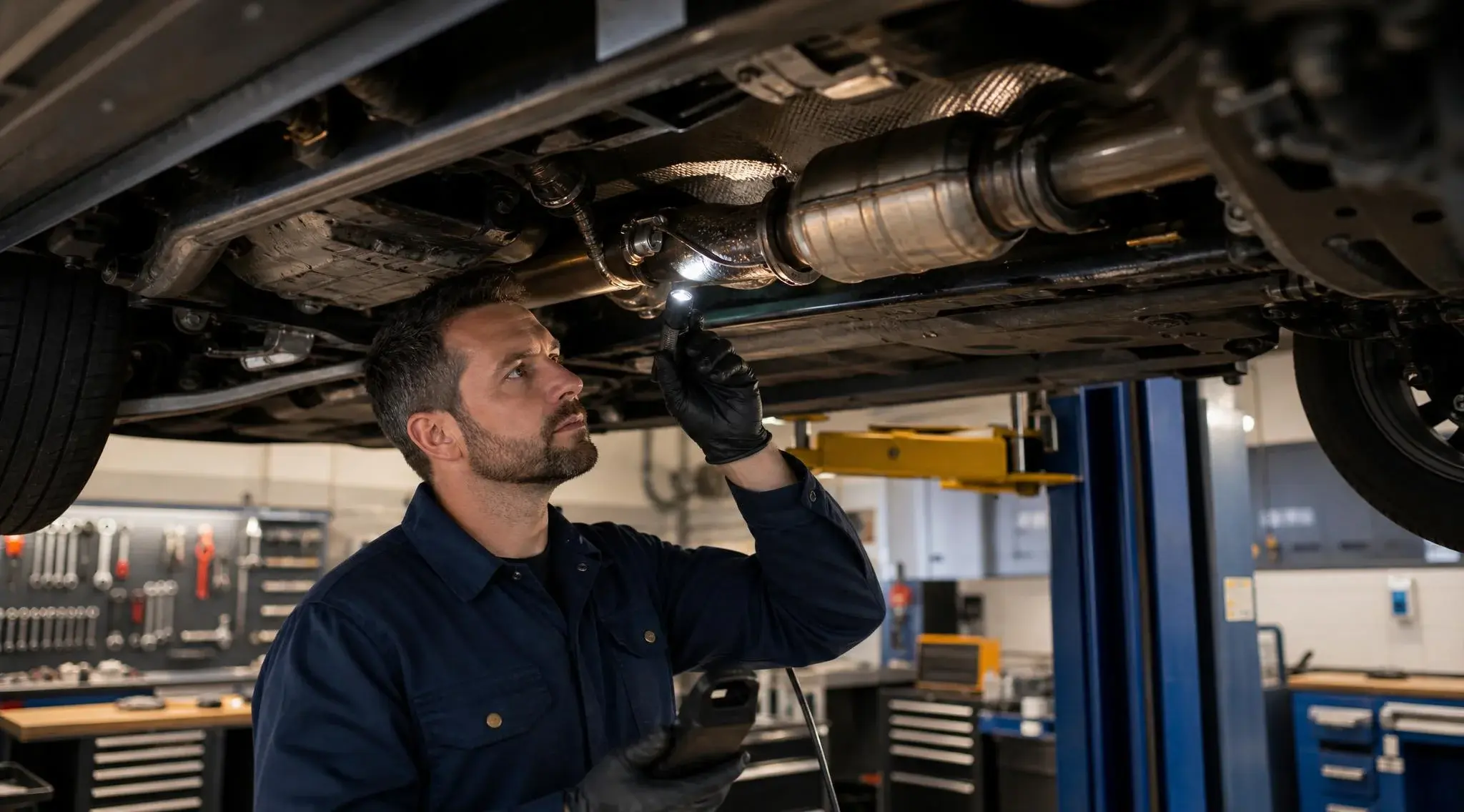
TL;DR 4 key takeaways Definition: The P0420 code indicates that the catalyst on bank 1 of a vehicle is operating below the efficiency threshold,...

TL;DR 4 key takeaways Definition: The P0455 indicates a large leak in the EVAP system, detected by the onboard OBD2. Fleet impact: Moderate in the...
.jpg)
 Anthony Mainville: Apr 29, 2026, 1:08:24 PM
AI agent platforms, the co-pilot model, and why technology should serve your people GOOGLE CLOUD NEXT 2026 RECAP , FLEET INTELLIGENCE SERIES PART 3...