P0420 Code on Fleet Vehicles: Diagnosis, Costs & Impact
TL;DR 4 key takeaways Definition: The P0420 code indicates that the catalyst on bank 1 of a vehicle is operating below the efficiency threshold,...


4 key takeaways
Commercial truck GPS devices give fleet managers real-time visibility over vehicle location, engine health, driver behaviour, and compliance data. Unlike consumer navigation units, fleet telematics systems feed a centralized platform supporting ELD compliance, route optimization, and predictive maintenance. AttriX deploys Geotab-based solutions to commercial fleets across Canada.
For fleet managers running ten trucks or five hundred, truck GPS devices are the operational backbone of modern transportation. They deliver real-time location data, engine diagnostics, driver performance metrics, and compliance records from a single dashboard. If you manage a commercial fleet in Canada, this guide covers what these systems do, how to select the right one, and how to deploy it effectively.
Commercial GPS trackers differ fundamentally from the navigation units found in consumer vehicles. For a fleet operation, the device is one component of a broader telematics ecosystem connecting vehicles, drivers, and management in real time.
A commercial truck GPS tracker records a vehicle's location, movement, and operational data, then transmits that information to a fleet management platform. Beyond positioning, it captures engine data, driver events, and duty status, giving fleet managers a full operational picture of each unit regardless of route or province.
The device connects to the engine control module (ECM) via a hardwired connection or OBD-II port, pulling speed, fuel consumption, fault codes, and idle time, then transmitting through cellular networks to an online platform. For a full overview of how GPS vehicle tracking systems improve fleet efficiency, our dedicated guide covers the core principles.
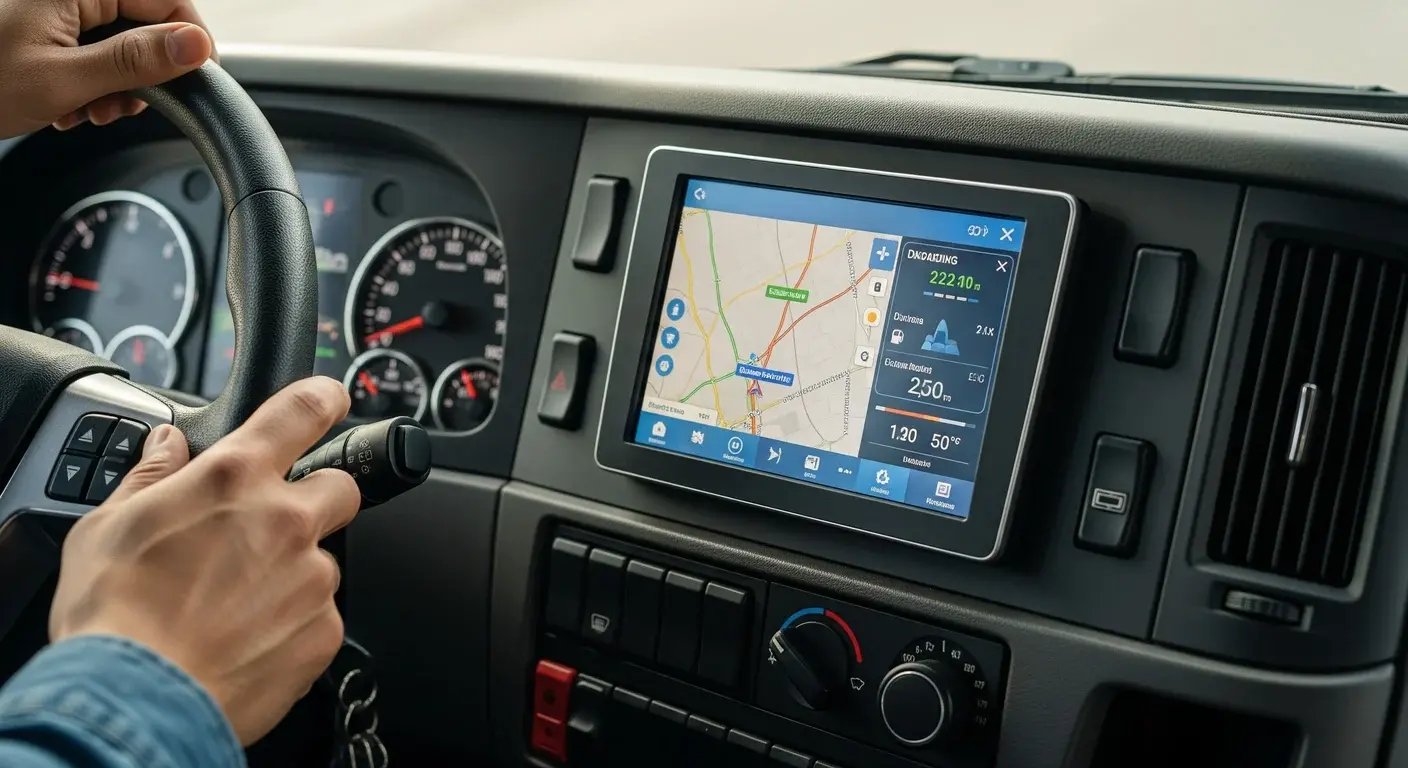
Hardwired trackers are permanently installed into the vehicle's electrical system, providing tamper-resistant connections and access to deeper engine data. Plug-and-play models connect through the OBD-II port and suit smaller fleets testing telematics for the first time. For long-term commercial deployments, hardwired devices offer more reliable and comprehensive data.
Integrating location data with operational, mechanical, and behavioural data gives fleet managers the actionable insight needed to run a tighter, safer operation than location tracking alone provides.
Real-time location data lets dispatchers reroute trucks around traffic or closures and give customers accurate arrival estimates. For cross-Canada operations, this visibility is essential to maintaining delivery schedules across long distances and time zones.
Fleet GPS systems pull diagnostic data directly from the ECM, flagging fault codes and mechanical anomalies before they cause breakdowns. This allows maintenance teams to schedule repairs proactively, reducing unplanned downtime and extending vehicle service life.

GPS systems log harsh braking, rapid acceleration, speeding, and excessive idling at the individual driver level, enabling targeted coaching rather than blanket policies. The GoSight onboard camera complements this data with video context for each safety event.
When a collision or sudden impact is detected, the system sends an immediate alert with location data and event details, supporting fast emergency response and insurance documentation. Truck dash cameras add a video layer, capturing footage for review and dispute resolution.
Beyond daily visibility, fleet GPS devices create measurable improvements across fuel costs, route efficiency, and driver accountability that compound over time.
GPS data combined with traffic history lets dispatchers optimize routes in real time, reducing unnecessary distance and fuel spend without adding vehicles or drivers.
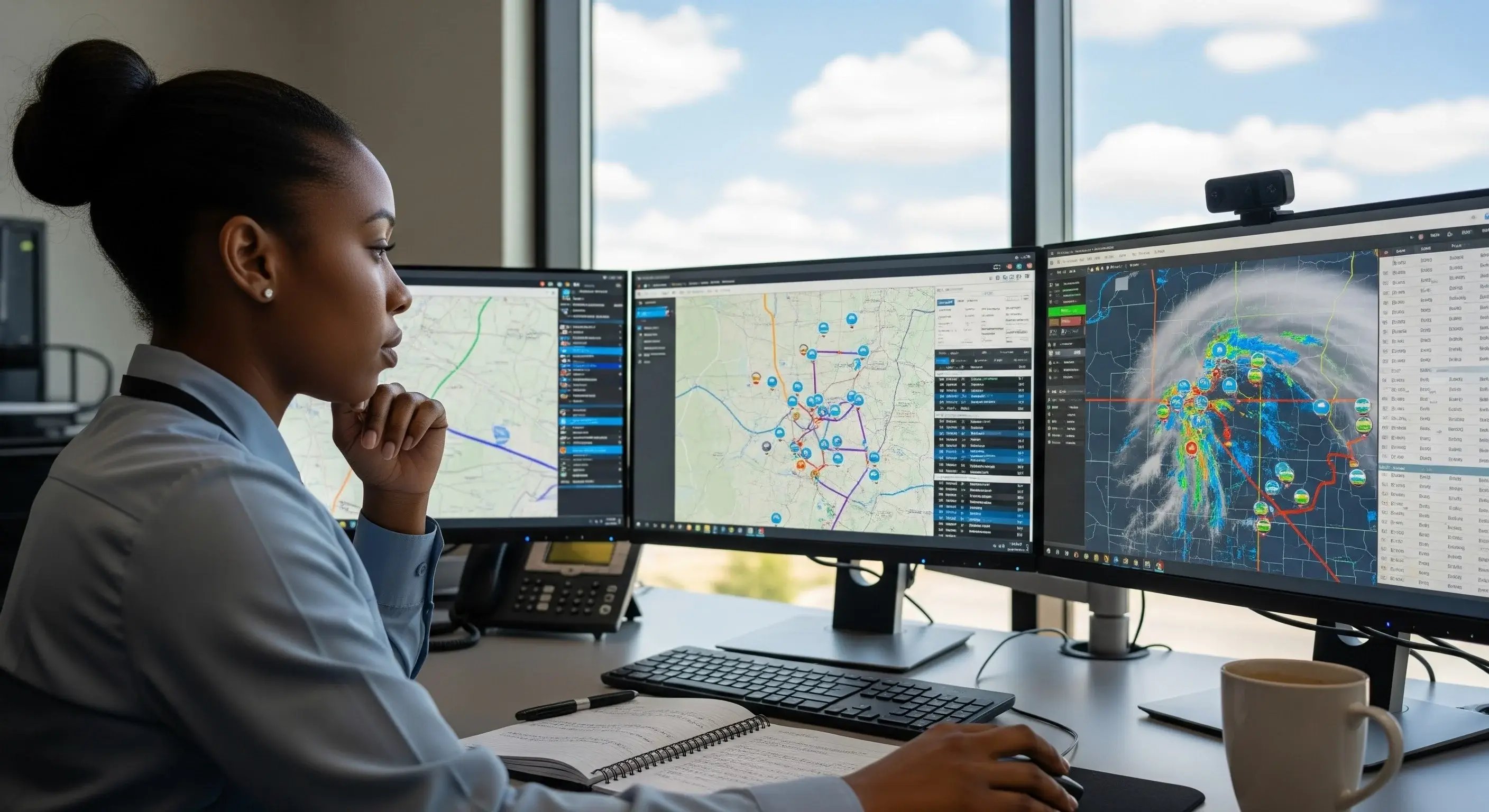
When location data connects to driver hours, maintenance records, and compliance documentation on a unified platform, it replaces disconnected spreadsheets with a single source of operational truth.
Idle tracking is one of the highest-ROI features in any fleet GPS deployment. GPS reports identify the vehicles and drivers with the highest idle time, enabling targeted interventions that produce measurable fuel savings.
When performance data is recorded and reviewed consistently, driver behaviour improves. Regular reports and coaching conversations build safer habits over time and give fleet managers a fair basis for recognizing high-performing drivers.
Canadian commercial fleet operators have specific regulatory obligations that a well-integrated GPS system can directly support through automated recordkeeping.
Under Transport Canada's mandate, commercial motor vehicles with a GVWR of 4,500 kg or more operating under federal jurisdiction must use a certified electronic logging device to record hours of service automatically.
Many fleet GPS platforms include integrated ELD functionality, eliminating the need for a separate device. For a complete overview of who is required to comply and what exemptions apply, see our electronic logging device guide.
Commercial-grade fleet tracking systems encrypt data at the device level and transmit it through secured channels with role-based access controls, protecting location data, driver records, and vehicle diagnostics in compliance with Canadian privacy legislation.
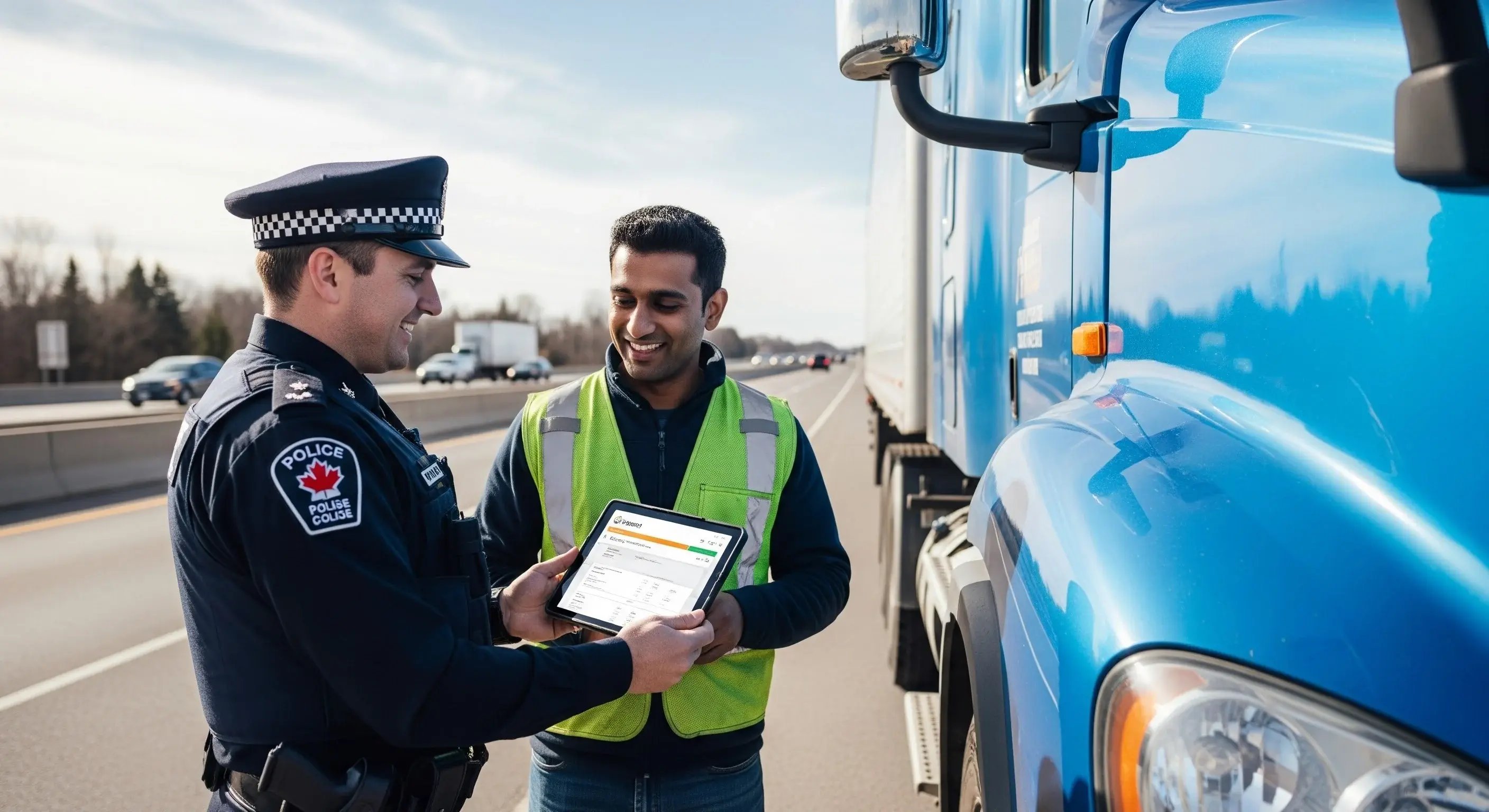
Different fleet types have distinct tracking priorities. A strong GPS platform handles all of them from the same dashboard without requiring separate tools or data exports.
For delivery fleets, GPS tracking supports proof of delivery, customer notifications, and exception management. Real-time visibility lets dispatchers resolve problems before they reach the customer.
Long-haul operations require tracking that works reliably across carrier networks in remote areas and integrates with hours-of-service compliance tools. Multi-network SIM configurations or satellite-enabled devices address connectivity gaps in low-coverage regions.
Geofencing creates virtual boundaries around depots, customer sites, or restricted zones, triggering automatic alerts when a vehicle enters or exits a defined area. Our guide on geofencing for fleet tracking covers the main operational use cases in detail.
Selecting the right truck GPS devices means matching device capabilities and platform features to your operation's actual scale and regulatory profile. What works for a 15-truck regional fleet differs from what a 300-truck national carrier requires.
Prioritize systems with a proven track record in commercial truck environments: accurate positioning in rural and urban conditions, reliability in extreme temperatures, and compatibility with your existing vehicle models and communication infrastructure.
At a minimum, look for real-time location updates, ELD integration, driver behaviour monitoring, engine diagnostics, maintenance alerts, geofencing, and tamper detection. Backup power ensures continuity if a device is disconnected.
The GPS platform should connect to your dispatch tools without manual data exports. Native integration with MyGeotab centralizes all operational data in one place. Equipment tracking for non-motorized assets such as trailers and containers can be managed from the same platform.
A successful GPS deployment depends as much on planning and communication as on device selection and configuration.
Professional installation ensures devices are correctly wired into the ECM and configured to match your reporting requirements, reducing the risk of tampering and data gaps from loose connections.
Drivers and dispatchers need clear guidance on what is tracked and how the data is used. Transparency about the system's purpose, with a focus on safety rather than surveillance, improves adoption and reduces pushback from drivers.
Assign dashboard ownership to a specific role and set automated alerts for key events. Consistent review of performance reports is what converts a GPS investment into measurable operational results.
Most implementation challenges are predictable and manageable with the right approach from the outset.
Driver adoption is the most common implementation challenge. Framing the system around safety improvements and fair performance tracking, and involving drivers early in the rollout, reduces friction significantly. Drivers who understand the data are more likely to act on it.
Multi-network SIM configurations switch between carriers based on signal availability, while local data storage syncs records when connectivity is restored. This keeps HOS and diagnostic records intact regardless of where the truck operates in Canada.
Regular firmware updates, strong authentication for platform access, and periodic permission audits keep the system secure. Canadian data storage and clear retention policies reduce exposure under federal and provincial privacy regulations.
Fleet telematics is evolving rapidly, and the systems deployed today are built to accommodate new capabilities as they emerge.
Next-generation platforms use AI-driven analysis to move beyond reporting into prediction, identifying patterns in vehicle data that precede mechanical failures and flagging driver behaviour trends before they become safety incidents.
Predictive analytics already allow fleet managers to anticipate maintenance needs and model the impact of route changes before implementing them. As autonomous trucking matures, the telematics infrastructure built today will form the data foundation that future automation depends on.
Cloud-based fleet management platforms scale without infrastructure changes. Adding vehicles to an existing deployment is straightforward, so the GPS investment made for 20 trucks applies equally when the fleet grows to 200.
AttriX is Canada's leading Geotab integrator, with more than 60,000 heavy vehicles connected across the country. Our team handles the full deployment lifecycle: device selection, installation, platform configuration, driver training, and ongoing compliance support.
The AttriX Locator provides continuous visibility for powered vehicles and non-motorized assets such as trailers and containers, delivering reliable tracking data in all conditions, including remote areas and temperature-controlled environments.
AttriX integrates all vehicle and equipment data into MyGeotab, giving fleet managers a single dashboard for location tracking, diagnostics, driver performance, and compliance records, eliminating the need for multiple disconnected tools.
Real-time alerts, geofencing, and tamper detection give fleet managers immediate notification when activity falls outside normal parameters, whether unauthorized movement after hours or a truck leaving a designated zone.
For fleets managing trailers, containers, and intermodal assets, AttriX supports Phillips Connect and BlackBerry Radar hardware, extending smart sensor data and supply chain visibility to assets that standard GPS devices do not reach.
Talk with a specialist to discuss the right truck GPS configuration for your fleet.

For fleet managers, the best truck GPS solution is a telematics platform that combines real-time location tracking with ELD compliance, driver behaviour monitoring, and engine diagnostics. Consumer navigation units address individual routing needs but are not designed for multi-vehicle fleet oversight. Platforms built on Geotab, deployed by AttriX across Canada, are purpose-built for commercial fleet management.
Yes. GPS tracking is legal across all Canadian provinces when used transparently. Employers must inform drivers that tracking is in place, typically through employment agreements or fleet policy documentation, in line with federal and provincial privacy legislation governing workplace monitoring.
The answer depends on the use case. For commercial fleets, the standard is a certified telematics device connected to a fleet management platform, providing centralized data on location, engine performance, compliance, and driver behaviour. AttriX can help identify the right truck GPS configuration for your operation.
A standard car GPS provides navigation. A commercial truck GPS system is a full telematics solution tracking location alongside engine diagnostics, hours of service, driver behaviour, and fuel consumption, with all data feeding a platform accessible to the full management team in real time.

TL;DR 4 key takeaways Definition: The P0420 code indicates that the catalyst on bank 1 of a vehicle is operating below the efficiency threshold,...

TL;DR 4 key takeaways Definition: The P0455 indicates a large leak in the EVAP system, detected by the onboard OBD2. Fleet impact: Moderate in the...
.jpg)
 Anthony Mainville: Apr 29, 2026 1:08:24 PM
AI agent platforms, the co-pilot model, and why technology should serve your people GOOGLE CLOUD NEXT 2026 RECAP , FLEET INTELLIGENCE SERIES PART 3...